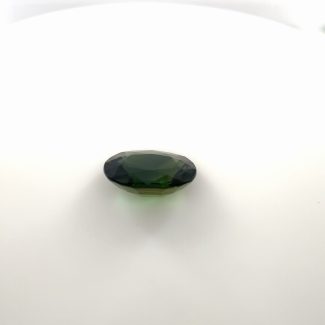


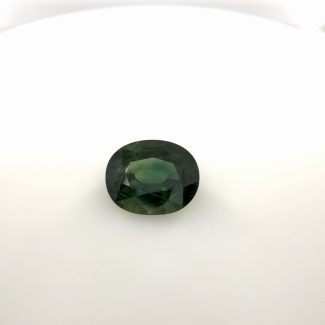



This GIA certified teal sapphire from Pailin weighs 2.49 carat and is cut in an oval form.
Pailin sits in the Cardamom Mountains of western Cambodia, close to the Thai border, and for more than a century it has been one of Southeast Asia’s most storied gem-producing regions. The area is famous for its basalt-related gem gravels, where rivers and ancient volcanic activity concentrated corundum — sapphire and ruby — together with zircon and garnet. For local communities, gem mining has long been part of daily life, with families working small pits and sieving river gravels much as their parents and grandparents did. Pailin sapphires are typically known for their deep, saturated blue tones and for a slightly sleepy, velvety character that distinguishes them from the brighter, electric blues of some other origins. The basalt-related geology of the region contributes to the particular color and crystal character found in its stones. For a buyer, a Pailin stone is not just a piece of corundum; it is a tangible connection to one of Asia’s historic gem trades. Sapphire is the colored variety of the mineral corundum, a crystalline form of aluminum oxide that ranks 9 on the Mohs scale of hardness — second only to diamond among natural gemstones. This extraordinary hardness makes sapphire one of the most durable choices for jewelry that is worn every day, which is why it has anchored engagement rings, signet rings, and heirloom pieces for generations. Although the word sapphire is most often associated with blue, the mineral actually occurs in nearly every color of the rainbow, each hue produced by trace elements within the crystal. Blue sapphire owes its color to iron and titanium, while the precise shade depends on their proportions and on the conditions in which the crystal grew. Beyond hardness, sapphire is valued for its luster, its ability to take a bright polish, and its excellent resistance to heat and chemical exposure. Few gemstones combine beauty and practicality so completely, which is why sapphire remains one of the ‘big three’ of the colored stone world alongside ruby and emerald. Offered here is an individual loose sapphire of greenish blue color, presented in an oval cut. Each loose gemstone in our inventory is one of a kind: its exact combination of origin, color, weight, and outline exists only once. The oval silhouette gives a designer generous flexibility — it can anchor a solitaire engagement ring, sit gracefully in a pendant, or be paired with accent stones in a more elaborate composition. This particular stone has been gently heated, a traditional and fully accepted treatment in the colored gemstone trade. Heating mimics the natural conditions deep within the Earth, improving color and reducing visual distractions so the stone’s best qualities can be seen clearly. The great majority of sapphires and rubies on the world market are heated, and the practice has been documented for centuries. We state it openly here because transparency matters: a buyer should always know exactly what has, and what has not, been done to a gemstone. This stone comes with a GIA laboratory report, available with the listing, documenting its identity and key characteristics. It belongs to our Jewelry Grade, a curated group of stones selected for their individual qualities. For a design brief centered on a natural sapphire, this gemstone offers a defined and honest starting point: a documented source, a stated treatment, and a shape ready to guide a bespoke setting. The final visual effect will depend on the finished setting and lighting — yellow gold will warm the color, white gold or platinum will keep it cool and crisp. Designers can use the stated weight and outline to plan a custom ring, pendant, or another one-of-a-kind jewel that will be worn, enjoyed, and eventually passed on.